
 303-317-2230
8 Signs Your Garage Door Needs Repair (Denver Guide)
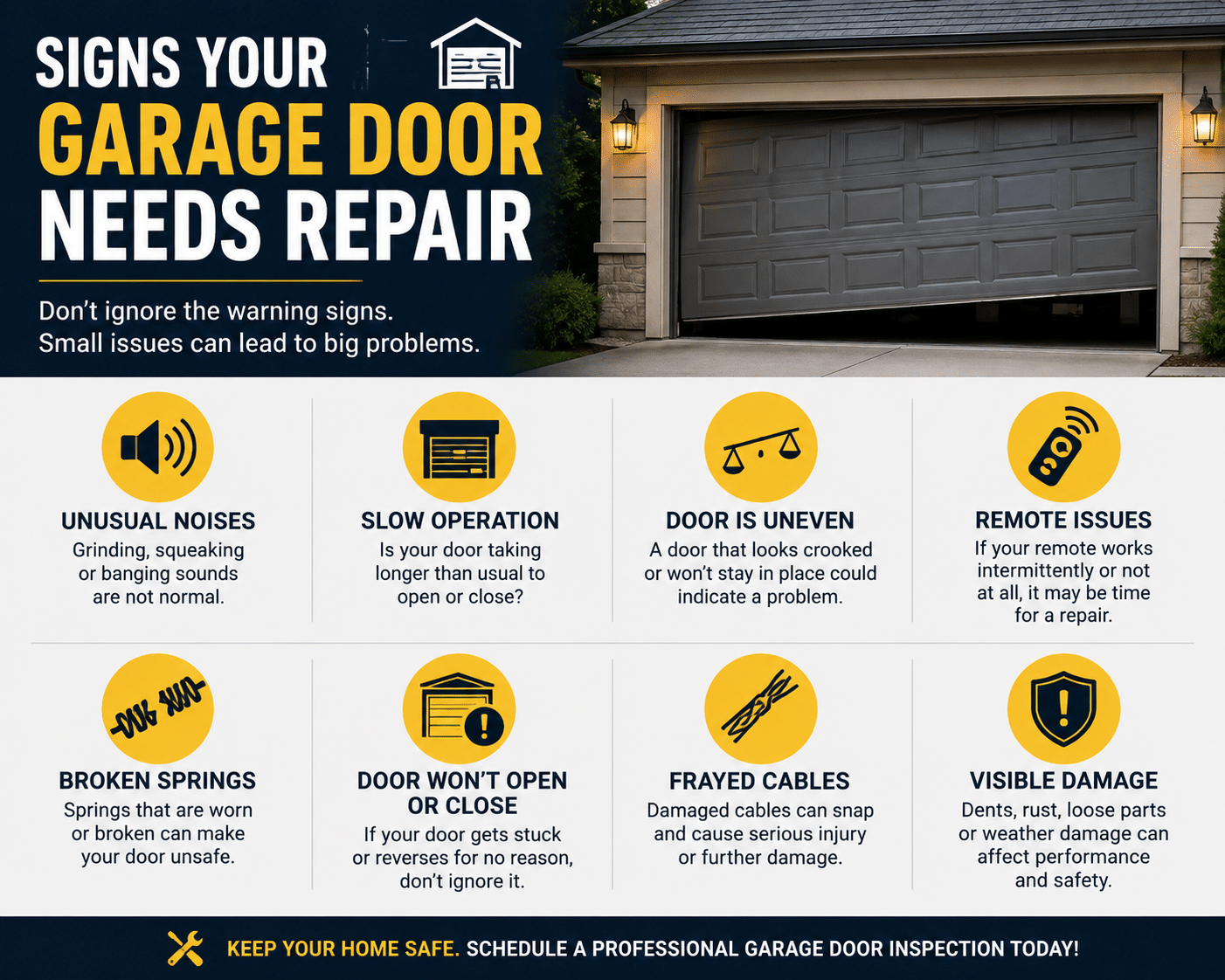
Your garage door usually warns you before it quits. Learning the signs your garage door needs repair helps you fix a small issue before it turns into a stuck door or a broken spring. Denver homes face dry air, hail, and wide temperature swings that speed up wear. This guide walks you through the warning signs and what each one means.
Key Takeaways
- Act on noise early. Grinding or popping points to worn rollers or spring tension, and worn rollers cause about 60% of noisy-door cases.
- Watch the door move. Slow response, jerky travel, or a sagging side signals a spring, cable, or opener problem.
- Take safety failures seriously. A door that reverses or will not close often means the photo-eye sensors need attention.
- Track your door age. Garage doors last 15 to 30 years, and springs are rated near 10,000 cycles, roughly 7 to 12 years.
- Handle Denver rust fast. Dry air and hail speed up corrosion, so clean and seal rust spots before they spread.
- Call a pro for tension parts. Springs and cables hold heavy tension, so leave those repairs to a technician.
How Do You Know If Your Garage Door Needs Repair?
Your garage door sends clear signals when parts wear down. Strange sounds, slow movement, uneven travel, and visible damage all point to components under stress. Catching these garage door problems early keeps a minor fix from becoming a major failure.
A garage door is the largest moving part of your home, and it cycles often. Most garage doors run through roughly 1,500 openings a year, so springs, rollers, and cables wear out over time. The signs below show you what to watch for.
1. Loud or Unusual Noises
A healthy garage door runs with a steady, quiet hum. When that hum turns into grinding, squeaking, or popping, something inside needs attention. Noise is often the first sign your garage door needs repair.
- Grinding: worn rollers or misaligned tracks creating metal-on-metal friction.
- Squeaking: dry hinges or rollers that need silicone-based lubricant.
- Popping or banging: spring tension problems, sometimes right before a spring fails.
- Rattling: loose bolts and hardware vibrating during travel.
Worn rollers alone account for about 60% of noisy-door inspections. Replacing rollers and tightening hardware usually fixes the sound and protects your tracks.
2. Slow or Delayed Response
Your garage door should start moving within a second or two of pressing the remote. A door that lags, hesitates, or moves in a jerky way points to trouble. The cause is often worn rollers, dirty tracks, aging springs, or a tired garage door opener.
Slow operation forces the motor to work harder on every cycle. That extra strain shortens the lifespan of your opener, so a quick inspection now saves you a bigger repair later.
3. Uneven or Sagging Movement
Stand in your driveway and watch the door close. One side sitting lower than the other, or a sag in the middle, means the door is out of balance. This usually comes from uneven cable tension or a weakening spring on one side.
An unbalanced door puts heavy strain on the hinges and opener gears. Left alone, it can pull the door off its tracks, which is a bigger and more expensive fix.
4. Garage Door Stuck or Refusing to Move
A garage door stuck halfway, or one that will not open or close at all, is a clear sign it needs repair. Common causes include a broken spring, a snapped cable, a track obstruction, or an opener fault. A door that suddenly feels very heavy by hand often means a spring has failed.
Do not force a stuck door, since that can damage the panels or opener. Our garage door repair team can diagnose the cause and get your door moving safely again.
5. Visible Damage and Garage Door Rust
Look over your door panels, tracks, and hardware every few months. Cracks, dents, warped sections, and rust all affect how the door performs. In Denver, dry air and hail make certain kinds of wear more common.
- Dented or cracked panels: often from hail or a bump, and they can throw off door balance.
- Garage door rust: a slow killer on steel doors and tracks that spreads if you ignore it.
- Warped or rotting wood: moisture damage that weakens the panel over time.
Handle rust early by cleaning the spot and sealing it before it eats through the metal. Catching rust and dents early keeps a small repair from becoming a full panel replacement.
6. Safety Sensor and Reversal Problems
Your garage door opener uses photo-eye sensors near the floor to stop the door from closing on a person, pet, or car. Federal safety rules have required these auto-reverse sensors on residential openers since 1993. When they fail, your door becomes a hazard.
Watch for a door that reverses for no reason, refuses to close, or closes without stopping for an object. Misaligned or dirty sensors cause most of these issues, though the fix sometimes involves the opener itself.
7. Garage Door Status Indicator Warnings
Many newer openers include a garage door status indicator, either a blinking light on the motor unit or an alert in a smartphone app. These warnings flag problems like a blocked sensor, a door left open, or a motor fault.
Do not ignore a flashing indicator or a repeated app alert. The pattern often points to the exact issue, which helps your technician diagnose the repair faster.
8. Frequent Repairs and Old Age
One repair is normal. Needing service several times in a year usually means the system is wearing out. When the cost of repeated fixes climbs, it can make more sense to replace a garage door than to keep patching an old one.
Here is how long the main parts of a garage door usually last, so you can judge where yours stands.
| Component | Average Lifespan | What Shortens It |
|---|---|---|
| Garage door | 15 to 30 years | Weather, heavy use, poor upkeep |
| Torsion springs | 7 to 12 years (~10,000 cycles) | Frequent daily cycles |
| Opener | 10 to 15 years | Strain from an unbalanced door |
| Rollers | 10 to 15 years | Lack of lubrication, dirt |
Can a Damaged Garage Door Be Repaired?
In most cases, yes. A single failed part, like a broken spring, a frayed cable, or worn rollers, is a straightforward repair. Repair is usually the right call when the door itself is sound, and only one system has failed.
Replacement makes more sense when the door is more than 15 to 20 years old, has several failing parts at once, shows heavy rust or structural damage, or needs a panel that is no longer made. A technician can measure the balance, check the springs, and tell you honestly which path saves you money.
When to Call a Denver Garage Door Pro
Some tasks are safe to handle yourself, like tightening a visible bolt or wiping down a dirty sensor. Spring and cable work is not one of them. These parts hold hundreds of pounds of tension and cause serious injuries every year when handled without training.
If your door shows any of the signs above, a professional inspection is the safe move. Red Rocks Garage Doors serves homeowners across the Denver metro, including Capitol Hill, Cherry Creek, Highlands, LoDo, and Five Points, with repair for springs, cables, rollers, tracks, sensors, and garage door openers.
Summary
The clearest signs your garage door needs repair are loud noises, slow or jerky movement, a sagging or stuck door, visible rust and dents, and safety sensor failures. Each one points to a specific part under stress. Acting early keeps a small garage door repair from turning into a full replacement.
Noticed one of these warning signs on your door? Contact Red Rocks Garage Doors for fast, friendly service across the Denver metro area, and get your door running smoothly and safely again.